Showing posts with label dSLRs. Show all posts

Renzie on the Canon Digital EOS 400D Rebel XTi

Friday, July 11, 2008
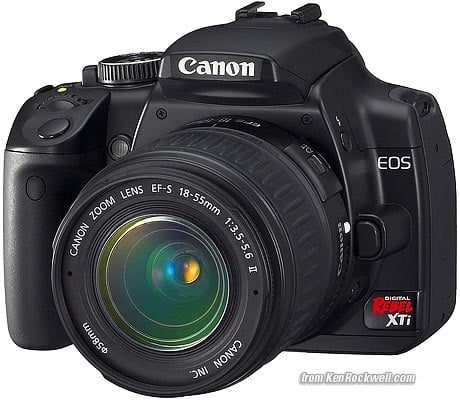
I picked up this baby a few days upon arriving in Los Angeles. I couldn't help but notice how much cheaper electronics are in the United States (compared to the Philippines), and since I wanted a step up from my old digital camera (which was an Sony 3.1 Megapixel I've had since December 2004), I thought the Canon Digital EOS 400D Rebel XTi would be a good choice for a digital photography amateur like myself.

After all, the reviews on the Canon Rebel XTi had been consistently great. A quick check online would tell a newbie like me that I should consider getting either a Canon, or one of those nice little Nikon cameras. In fact, I even wrote a few posts a couple months back.

In the end, I picked up the Canon Digital EOS 400D Rebel XTi at the Circuit City in Glendale. That, plus a 4Gb CF Card, and a nice little bag to go with it. For the duration of my month-long stay in Los Angeles, the Canon Rebel XTi has always been by my side, and it's one of my new favorite toys.

I've decided to put my amateur photography skills into good use by starting a food and travel blog. It's a work in progress- I'll announce it as soon as it's ready.

My Review of the Canon Digital EOS 400D Rebel XTi

The Canon Rebel XTi is a remarkable camera, and is a great choice for amateur digital photographers like myself looking to venture into more serious photography.

It's an extremely user-friendly camera, as it has a great range of fully automated picture-taking functions, so you can start using the Canon Rebel XTi straight out of the box, with just a quick review of the instruction manual.

(But it's always a prudent thing to read through the whole manual before reallly putting in a lot of play time with your new toy!)

The basic camera already comes with an EF-S 18-55mm - which is really a good all-around lens as it its. Later on, as you get the hang of the Canon Rebel XTi, you could purchase additional lenses for more specialized functions like give you a farther zoom, or the ability to shoot photos in dark or low-light, etc.

As I mentioned, the Canon Digital EOS 400D Rebel XTi has a lot of great fully automated picture-taking functions, with convenient pre-sets that allow you to specific shots with a quick flick of a switch- portraits, landscapes, close-ups, etc. This is really great for beginners, or for those who wouldn't mind letting the camera do all the work- which for me is something I could totally appreciate.

Much later, you could tinker around with the more advanced settings- an area which I have yet to figure out for myself, newbie that I am.

You'll definitely appreciate the Canon Rebel XTi a lot better with just a little more photography know-how- get someone to teach you, or learn from a book or online. With an interface that's easy to use and easy to familiarize yourself with, it's very encouraging for amateurs and beginners to make an effort to get into photography some more, and pick up some new theories, as well as new tricks along the way.

And the later on, you can buy even more additional accessories for your Canon Rebel XTi. Not only would you want a variety of lenses, but you might also want a Speedlite or two, a wireless remote and tripod, maybe even an angle finder and battery magazines much later on, depending on your needs as a photographer.

Thanks to KenRockwell.com for the Canon Rebel XTi photo. Check out his site for some great tips on getting the right camera and taking better pics. You may also want to visit the Digital Photography Review for more on the Canon EOS 400D Digital Rebel XTi, or the tech section on Yahoo!

Cheers, everyone!

Read more...

What dSLR Does Veronica Mars Use?

Tuesday, March 25, 2008

While we're on the topic of digital single-lens reflex (dSLR) cameras, let's find out what kind of cameras Veronica Mars used on her CW show a year or two back.

See, I've been a huge fan of the TV series (one of my guilty pleasures, actually), and I have to admit, I was sorta impressed with that big-ass camera she slings around. Of course, it's fairly obvious that a set-up like that doesn't come cheap- but it made sense- since they run a small detective agency, it's all probably used for work.

At any rate, I've had a renewed interest in dSLR's recently. I figured that since I'm blogging professionally now (and full-time, I might add), it might actually make sense to get myself a better camera. By better, I mean, something that would be a step up from my handy 5.1-megapixel Sony Cybershot. So in an earlier blog entry, I actually did some homework.

Here's What I Found Out About Veronica Mars' Cameras.

Apparently, there's been a discussion on a VM fansite on Livejournal as to what kind of dSLR's were featured on the show. As far as we can tell, Kristen Bell's character had used three different cameras, all of 'em Nikons.

1. A Nikon D2H with a huge-ass zoom lens (possibly the 70-200 f/2.8 VR), used in the series premiere.
2. Then she also had a the Nikon 8800, as seen in an episode mid-season (of Season 1). It ain't no big deal, but a point-and-shoot that still has a lot of great features.
3. By Season 2, we see her wielding a Nikon D70 with the relatively cheaper, but still impressive 80-200 f/2.8D zoom lens.

Seems like a product integration deal for Nikon, but it's probably not (then again, they probably should have!). The fansite suggested that the show's director of photography, Victor Hammer (who might have a personal preference for Nikons) may have had a few spare cameras lying around, and therefore used one of his toys for Veronica Mars to play with. Nice.

You can watch the UPN/CW drama series over again on DVD, or just catch Kristen Bell on season 2 of Heroes, or as the omniescent voiceover on Gossip Girl, this time without the cool cameras. :)

Cheers, everyone!

Read more...

What's A Good dSLR for A Newbie?

Monday, March 24, 2008

Blogs and digital photography go hand-in-hand, just like Hall & Oates, Tango & Cash and Dungeons & Dragons.

I was at this one local bloggers' event not too long ago, armed with my trusty Asus EEE PC and 5.1 megapixel Sony Cybershot- my standard loadout pretty much wherever I go. Now when they start coming out with mobile phones that pretty much out-pixel your own compact digital camera, then I say it's time to get a new camera.

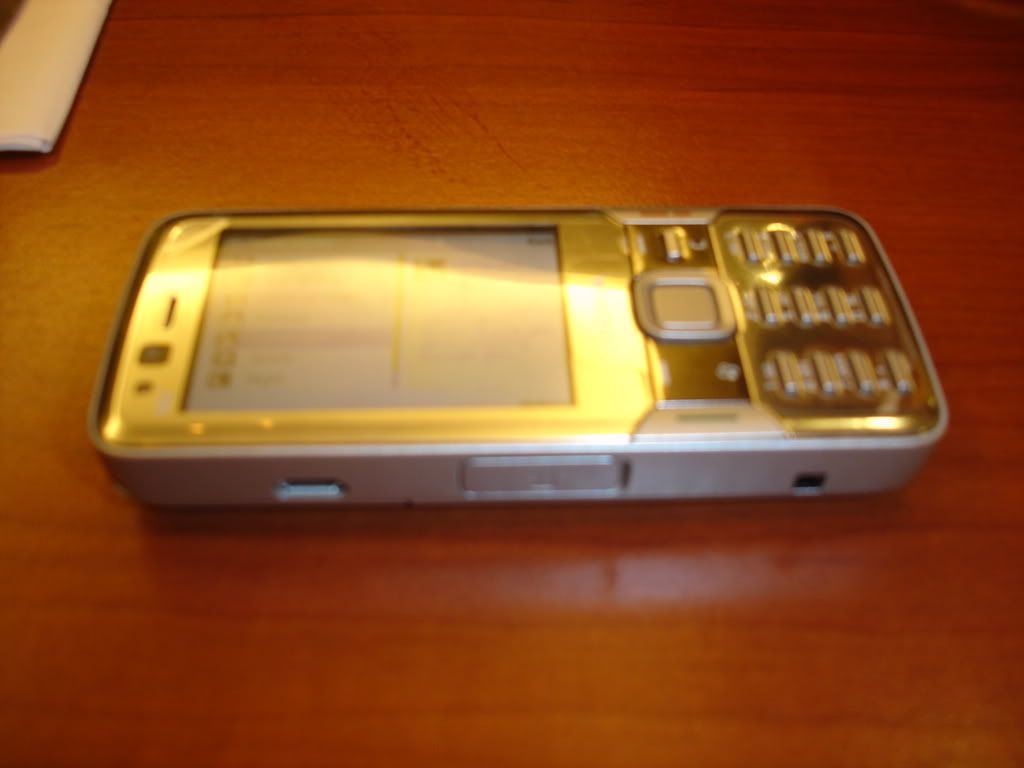
Incidentally, it was Fritz's Nokia N82 (yes, that's his phone pictured to the right) that made me realize it's really time to get me some new hardware. Juned had a hand in that too (a few months back), but the urgency was just driven home with the realization that my three-year old Cyber-shot can easily be obsolete in a couple of weeks. What? Oh, it's obsolete already? Well, so much for that.

So, back to our topic on great dSLR's for beginners:

In an article published on CNet.com.au a little more than a year ago, we get ourselves a helpful little look into getting our first dSLR. Sure, there may be better ones out in the market now, but when you know absolutely nothing about these babies, I'd say this article is a good place to start. In fact, I'm del.icio.us'ing/Digg'ing/StumbleUpon'ing it right now.


Why You Would Want To Get A dSLR

Maybe you don't have to. In fact, a compact digital camera (like my CyberShot) works just fine. But if for some reason, you'd want to take your photography to a higher level, then maybe it's time you start investing in a digital single-lens reflex (dSLR) camera.

I'm only geek enough to want to get into geekier things, so if you want to read up more on what a dSLR is all about, you may want to start Googling it up, or reading all about it here on Wikipedia.

According to CNet's Mary Lojkine:

An SLR is more responsive than a compact, allowing you to take photos more quickly; it gives you more control, so you can be more creative; and it's more flexible, allowing you to change the lens or use accessories such as flashguns and remote controls.
There you have it. Thanks, Mary.


Recommended dSLRs For Beginners


That same CNet article generally recommends these four entry-level SLR's, each has its own pros and cons, just like a Detour on The Amazing Race. But why these four? According to Mary,
...these entry-level SLRs are designed for people who are used to pocket-friendly compacts, the manufacturers have kept them small and light. Experienced photographers may scoff, telling you that larger and heavier cameras are easier to handle and hold, but if you're used to a compact, you won't want anything too big.
That being said, let's check out our four recommendations:

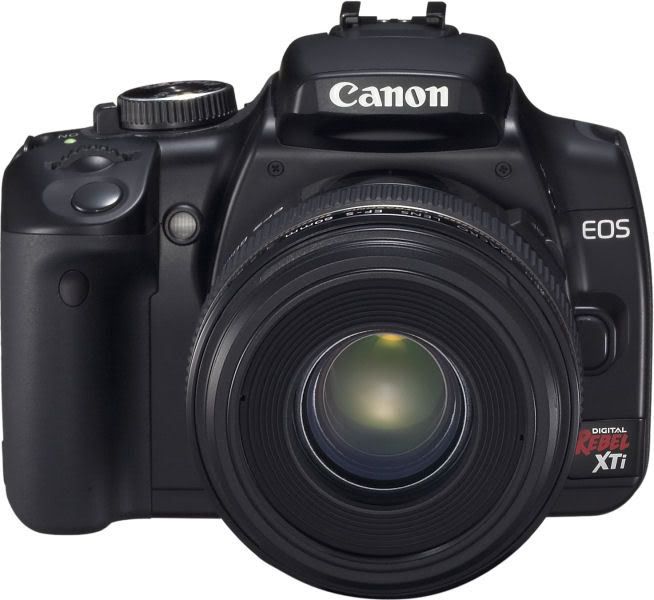
1. the Canon EOS 400D. The Canon EOS 400D ships with 18-55mm zoom lens. It has a 10-megapixel sensor, and it gives you great customization options with a wide range of lenses and accessories you can attach to it, depending on what you need. Has a good balance of auto, semi-auto and manual controls for you to explore as your skills improve.
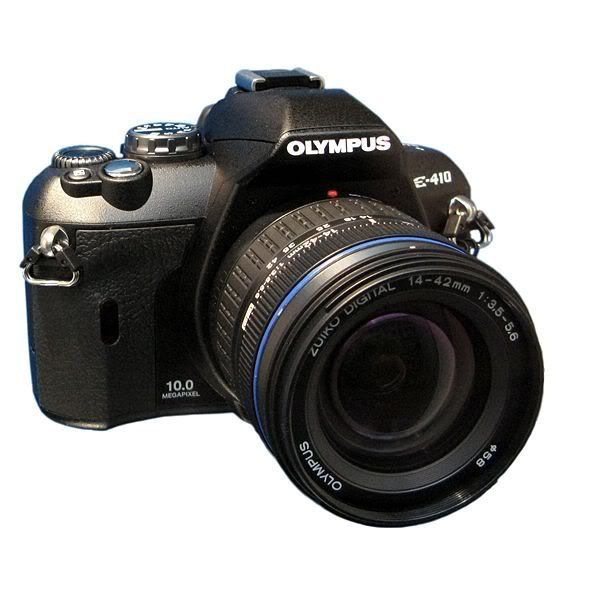
2. the Olympus E-410. The Olympus E-410 is the smallest and the lightest of the four- great if you want to carry around less camera. It also comes with a 10-megapixel sensor. Compared to the Canon and Nikon, it comes with a better zoom range out of the box- with a twin-lens kit with 14-42mm and 40-150mm lenses, or 28-84mm and 80-300mm in 35mm terms.
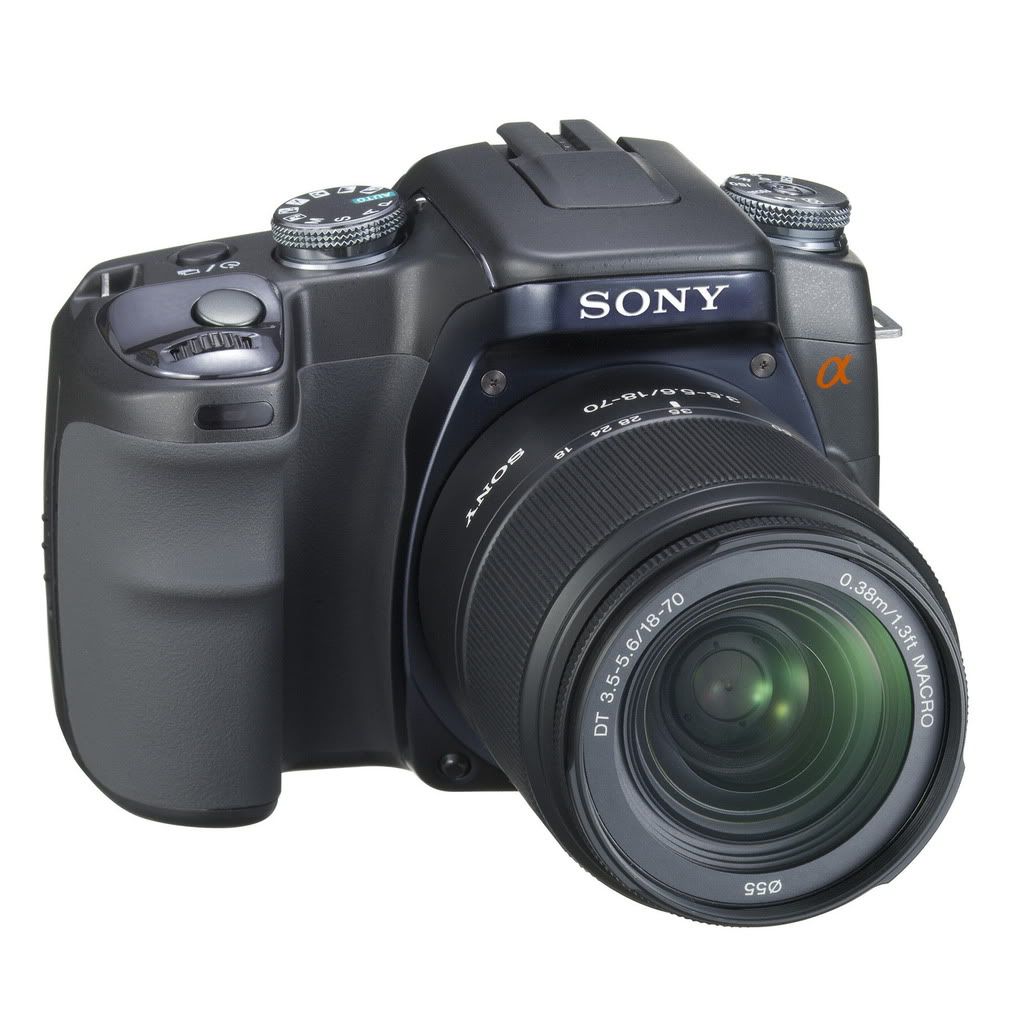
3. the Sony Alpha DSLR-A100 . The Sony Alpha DSLR-A100 also has a 10-megapixel sensor, and is a relative newcomer in the dSLR market, using the tech it got from Konica-Minolta. It has a built-in image stabilization option (whereas you have to get special lenses for the Canon and Nikon). It also has auto focus, anti-static coating and 21 compatible lenses.
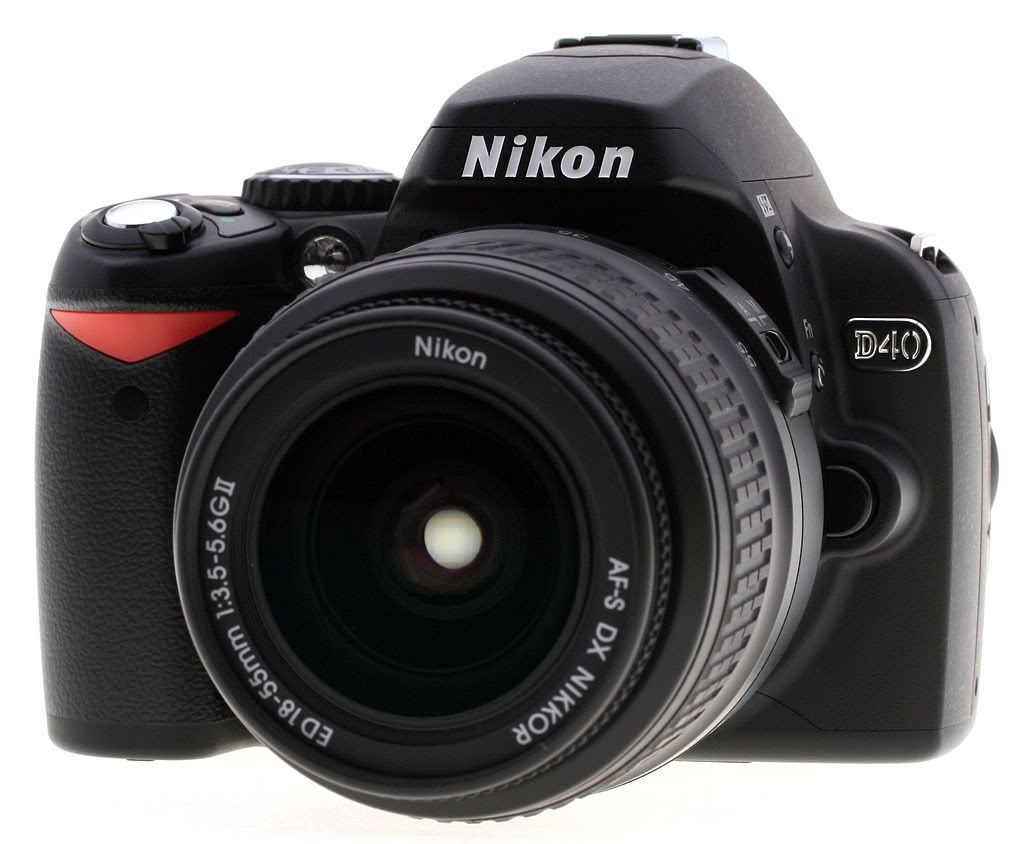
4. the Nikon D40. Just like the Canon, the Nikon D40 also ships with a zoom lens, but only comes with a 6-megapixel sensor. Still not bad, and will still produce better pics than a regular compact, but you might feel you're lagging behind with this one. On the plus side, the Nikon also has a lot of accessories and lenses you can get later on, so in that regard, it's just as customizable as the Canon. That said, it's still a great transition camera as your first dSLR.


The Final Word

As far as CNet has presented, you have a good variety of transition dSLRs too choose from, depending on how you see yourself using your camera in the more immediate future. But here's what they have to say:
...it's a close-run thing, but for our money, the Canon EOS 400D has a slight edge. It costs a little more than the Nikon D40, but the extra megapixels will keep you happy for longer.
So there you have it, ladies and gentlemen. I hope this helps you out as much as did for me. Still, don't stop looking around and checking out other cams. There might be other, newer models out there that could be better than the ones presented here. I'd sure love to hear about it if you do find any.

Cheers, everyone!

Read more...

The Latest From Smashing Magazine

Dosh Dosh

The Latest from Mashable!

Search Engine Land: News About Search Engines & Search Marketing

The Latest from Daily Blog Tips

The Latest From Problogger

The Latest From A List Apart

Hot Topics: The Latest From Sphinn.com

The Latest From HarvardBusiness.org

The Latest From Copyblogger

The Latest From Lifehacker

Zen Habits, by Leo Babauta

Lateral Action

  © Blogger template Writer's Blog by Ourblogtemplates.com 2008

Back to TOP